

The idea that there is no objective truth, that we all have our own truth based on our subjective views of the world, has become very popular in recent years, especially among young people. It follows the postmodern claim that truth is not discovered but created. Most notably, it was the French philosopher Michel Foucault who argued that what we call 'truth' or 'knowledge' is intimately bound up with power relations. He believed that those in power ultimately determine our perspectives and produce knowledge to reinforce their power. According to postmodernists, language is a powerful tool that shapes our understanding of reality. Those who control language and discourse have the ability to shape and control power relations.
Postmodern thinkers such as Foucault provided an important critique of the Enlightenment view of man as a rational being with the capacity to know reality through the power of reason and scientific progress. Shedding light on the fact that there is always a myriad of contextual factors that subjectivise and distort our view of reality is an important intellectual contribution. It's also clear that power plays an important role in our perception of reality in many ways: for example, who funds science influences the production of knowledge, and who controls the media narrative influences what people think about the world.
But what was undoubtedly a useful analysis by Foucault has since taken on a life of its own, initially conquering the social sciences and humanities and then becoming highly influential in society at large.
According to author and journalist Sohrab Ahmari,
Foucault’s ingenious methods for analysing power have now emerged as but one more strategy for the maintenance and expansion of existing institutional power. This, even as these institutions themselves remain susceptible to his critique of what he called the ‘devious and supple mechanisms of power.’
Everyone in our elite institutions - NGOs, media and government - is now obsessed with winning the battle of narratives. Where power could be one of several useful lenses through which to explain the world, postmodernism has now infected our institutions to such an extent that power, exercised through discourse, has become the explanation for everything.
This worldview completely ignores the fact that human nature does exist. Our minds are not blank slates, as today's social sciences would have us believe. Our evolved biology explains much of how our minds work. Culture and tradition also contain much wisdom about life that we may not fully understand rationally, but which plays an important role in how we see the world.
Our beliefs don't have to be factually true to survive for very long. Religious and popular myths, for example, can persist in a culture for centuries and millennia if they prove useful to the people who believe in them. They often provide guidance on how to thrive in the real world, even if they are not factually true. They are metaphorically true, as evolutionary biologist Bret Weinstein puts it.
However, postmodern thinking ignores the power of reality and overestimates the power of discourse and narrative.
As the futurist Jordan Hall noted some years ago:
This is how delusions fall apart. Try as we might, our desire to interpret reality to mean what we want it to, at the end of the day, will always be checked against what reality actually is. It may take some time because we’re pretty good at making things up and pretending, but eventually reality is reality.
In other words, while (totalitarian) propaganda can distort people's sense of reality, it cannot do so forever.
How propaganda is failing
It's now eight years since Donald Trump was elected president of the United States and the British people voted against remaining in the EU. 2016 wasn't the beginning of the ongoing right-wing populist backlash, but it was when it began to be perceived as a real threat by Western elites.
What was obvious to everyone was that in the most urban neighbourhoods of the big metropolises like Berlin, Paris, London and San Francisco, very few people voted for populism, while in smaller towns and the countryside, the proportion of votes in favour of populism was often very high or even majority.
Most urban, academically educated people interpreted that the less educated people who supported populism were less able to deal with the complexities of modern life and were being misled by nasty populist leaders who offered simple solutions and pointed to immigrants as easy scapegoats for people's problems. According to this view, ordinary people are being manipulated by far-right narratives that are normalised by a multitude of online and offline actors.
Eight years later, this is still the most common view of the phenomenon to be found in the commentary of Europe's mainstream media and public television talk shows.
What has changed in that time, however, is that the discourse around the populist trend has become more hysterical, social divisions have widened, and despite immense efforts and hundreds of millions of euros spent on combating the phenomenon, national populism has gone from strength to strength almost everywhere in Europe.
Spaces where the rise of populism is more honestly and deeply analysed remain the exception in the mainstream media, despite all the signals that current strategies may be ineffective. Instead, our Western institutions and their representatives seem to see the problem entirely through a Foucaultian lens of the power of discourse, and they act as if the problem could be solved entirely by putting more effort into the war of narratives. Countless articles and reports have been written on how to counter far-right narratives. Whenever the populists get stronger, our liberal-progressive institutions stubbornly double down, putting more effort and money into pushing progressive counter-narratives.
Last week, after the right-wing populist AfD won the regional elections in the German state of Thuringia with 33% of the vote, several representatives of the Chancellor's Social Democratic Party, which was badly beaten in Thuringia (6% of the vote), argued that the elections showed that the party clearly needed to get its message across better.
However, a sober assessment of the narrative wars across Europe over the past few years should make it clear that ordinary people are now being bombarded as never before by the progressive messages that are favoured by the establishment. While it is true that populist parties are adept at using low-cost ways of reaching their audiences through TikTok and other alternative channels, their overall media presence is much smaller.
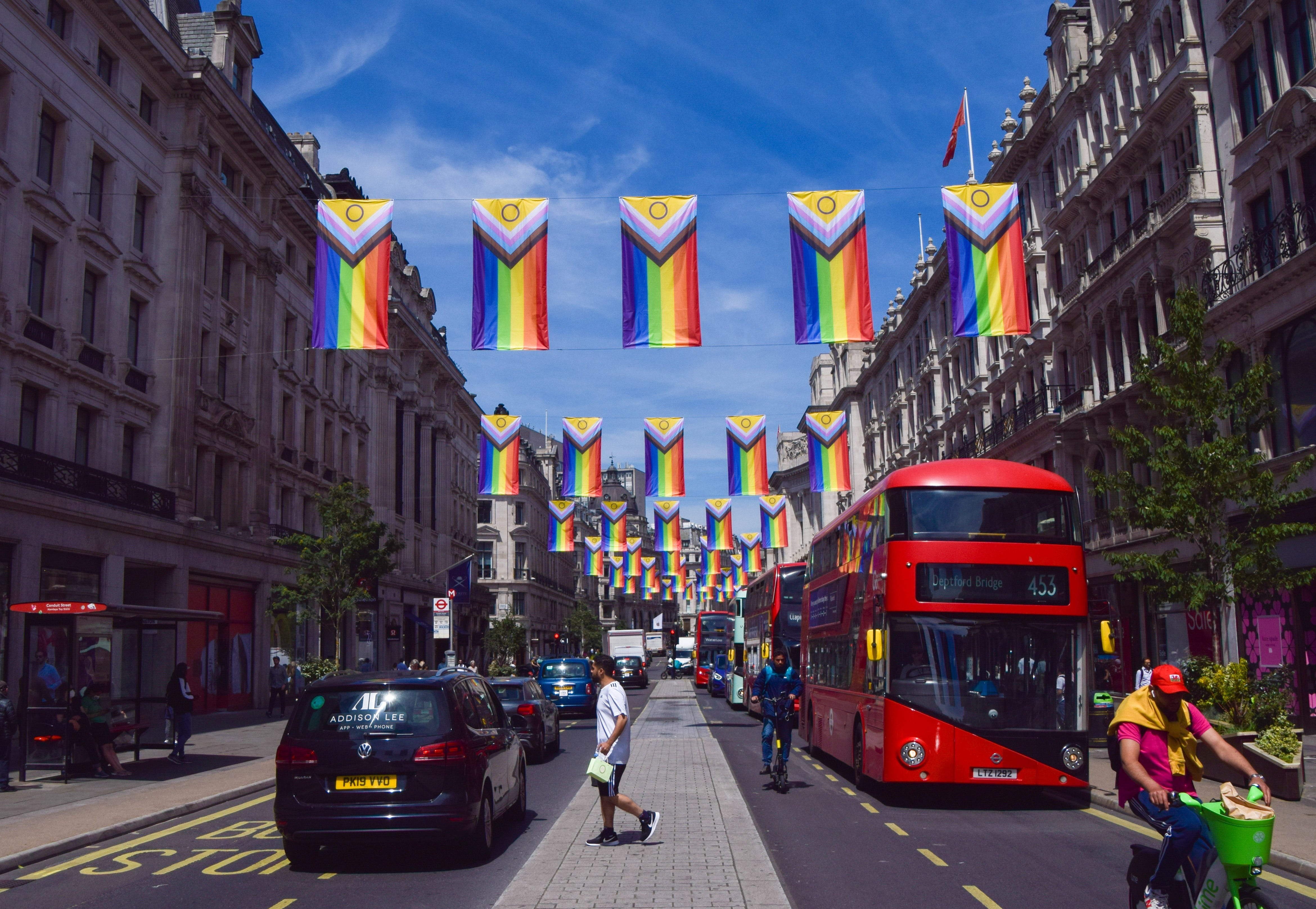
In recent years, cities across Europe have been plastered with pride flags (and more recently, the new intersectional pride flags) throughout the summer (and beyond). Pride days and Pride parades have a long tradition in the gay rights movement across the Western world, but what has happened since 2016 is largely a response to the rise of right-wing populism and the perceived or imagined homophobia and transphobia that has resulted. What is clear is that many hundreds of millions of euros of public and private money have been spent on promoting and celebrating these symbols and ideas, as well as on campaigns to combat LGBTphobia. When I was in London in the summer of 2023, the omnipresence of these intersectional pride flags felt like an overwhelming indoctrination, reminiscent of Nazi Germany, with an obviously different ideology.
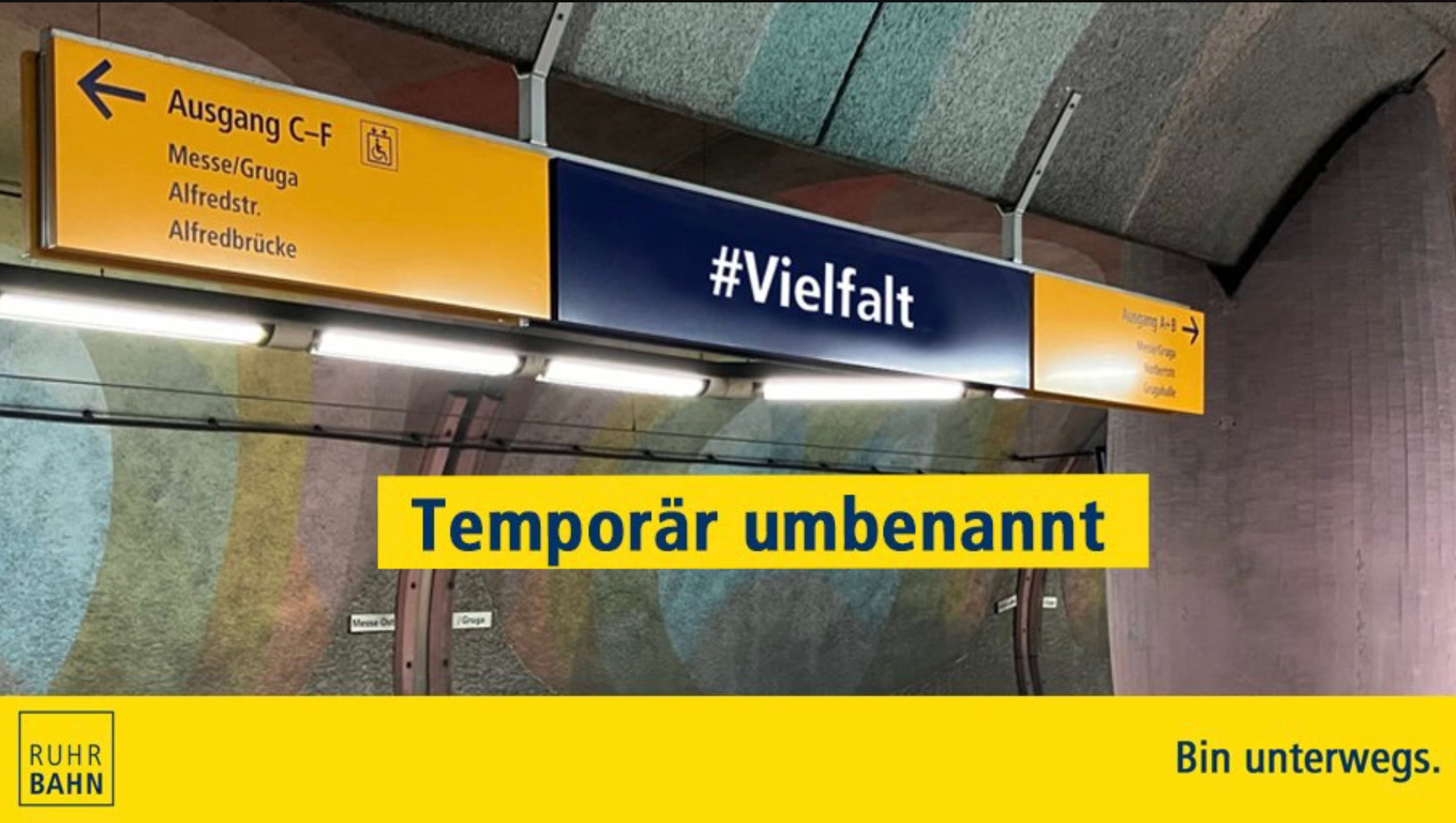
Similarly, our public space today is full of adverts promoting the idea of diversity in a broader sense. Across Europe, citizens are inundated daily with the message that diversity is now apparently the highest value. Few companies and public organisations seem to resist the competition to be the most supportive of ever greater diversity. Even if the message is not always explicit, it is about standing up to the right-wing populists who are seen as a threat to an ever more culturally and sexually diverse society.
Finally, the latest narrative being pushed on European citizens is the idea that we are fighting the battle of our lives to save democracy, and we can only do this by voting for the 'democratic parties', which are not the newer right-wing populist parties, but the older establishment parties. I will not go into the question of the deeper meaning of the saving democracy narrative here, but will do so in another essay sometime soon. But it is clear that what sounds like a dramatic call for a heroic movement to save our most cherished democratic system is something else entirely. So far, it doesn't look like anyone wants to abolish democracy in Europe.
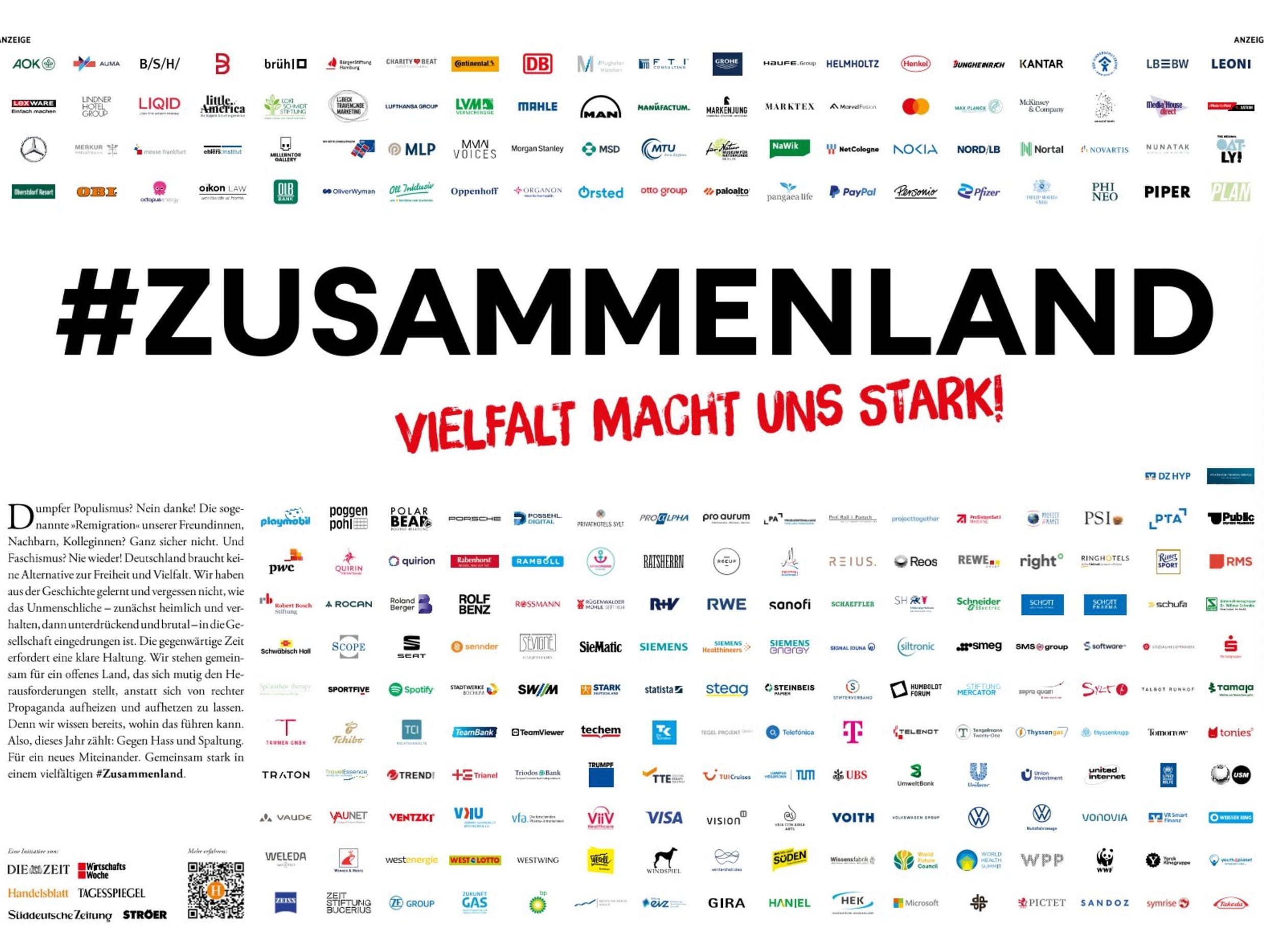
What is also clear is that huge amounts of effort and money are being put into trying to frighten ordinary people about the threat of the Nazis or fascists taking over and taking us back to the 1930s. As I described here, in January this year the German governments and a number of NGO allies led many German citizens of good faith to believe that a secret conference, not entirely unlike the Wannsee Conference where the Nazis planned the details of the so-called 'final solution of the Jewish question' in 1942, had just happened to plan the deportation of millions of people with a migrant background, and that the AfD was somehow responsible for this secret meeting and plan. Much of the story was cleverly constructed, and the link to the Wannsee Conference was shameless. But initially it looked like a great success from the government's point of view. Millions of Germans turned out after the government and NGOs called for demonstrations against the far-right threat, and a major initiative called #Togetherland was launched, bringing on board almost the entire corporate community in Germany to take a stand against the far-right threat to democracy (and in favour of diversity).
The German government already spends more than 180 million euros a year on NGO projects aimed at strengthening democracy. The amount has risen steadily in recent years, and the government's aim is to make this a stable budget of more than 210 million a year.
None of this seems to have had any effect on the number of people voting for far-right parties, either in Germany or elsewhere in Europe. On the contrary, far-right parties are gaining support, including the AfD in Germany in this summer's European and regional elections.
Worse still, the huge taxpayer-funded propaganda operation of recent years has not only been ineffective, it has clearly backfired. It has strengthened the populist upsurge.
How reality trumps narrative
The progressive battle of narratives doesn't work because the lives of most ordinary people are much more rooted in what happens in the real world than the lives of many highly educated people who spend much of their time in the online world, who live far away in their safe neighbourhoods, whose children go to private schools and who rarely use public transport.
A growing number of ordinary people feel that many of the political developments of recent years are not in their interests and that most of what is discussed in public has nothing to do with the reality of their everyday lives. They feel economically neglected and culturally patronised by urban elites who seek to impose their progressive ideology on everyone through the institutions they control.
In particular, most ordinary people perceive the extraordinarily high levels of immigration that Western elites have welcomed and often encouraged in recent decades as a threat to their collective identity and culture. When Trump won in 2016, he tapped into people's dissatisfaction with unprecedentedly high levels of immigration and the negative effects of economic globalisation. There was no need to normalise any narrative. People came to this conclusion on their own. They did not and do not blame immigrants, but they believe that their government's first duty is to protect the interests of its citizens.
Narrative is effective when it taps into people's perceptions of reality. This is why, famously, the slogan 'take back control' resonated so strongly with the majority of the British population in 2016. They hoped that once Britain had left the EU, the government would take control of its borders and reduce the number of immigrants. The fact that this hasn't happened is the reason for the continuing discontent.
Many ordinary people feel that the reality of a multicultural society has brought with it many downsides, notably rising levels of crime, increasing social fragmentation and the weakening of shared norms, institutions and values.
If people feel deeply that this is not a good direction for their nation, and then are bombarded with messages that celebrate diversity and completely ignore the fact that diversity should never be an absolute value, their negative reaction shouldn't surprise us.
Narrative can have the opposite of the desired effect when people clearly see that it doesn't relate to their reality, and even worse when people expect their political leaders to solve their problems rather than lecture them. Not addressing their real concerns and issues has the opposite of the desired effect. It continually signals that the liberal-progressive establishment is unwilling to discuss the real issues and it pushes people further towards populist parties.
The negative effect of propaganda is probably compounded by the fact that it stimulates people's tribal instincts. When people feel that they are not being taken seriously and are being treated like children to be educated by the elite, they perceive this as a constant attack on their values and honour. The perceived us-versus-them situation binds people together and pushes them further away from the liberal mainstream.
The blind adherence to the postmodern notion that the problem is almost exclusively a matter of normalised narratives is probably due to the fact that our political and academic elite now live so far removed from most ordinary people, and are so transfixed by their moral righteousness, that they have completely lost touch with reality.